Laser Cutting Nozzles
Before exploring the types, it's essential to grasp the function of a laser cutting nozzle. The nozzle is the component that directs the high-pressure assist gas (such as oxygen, nitrogen, or compressed air) to the cutting area, while also protecting the laser lens from spatter a
In the world of fiber laser cutting, every component plays a crucial role in determining the quality, efficiency, and precision of the final cut. Among these components, the laser cutting nozzle stands out as a small yet vital part that directly impacts the cutting process. As a leading provider of fiber laser cutting machines, handheld laser welders, and laser cleaning machines, PFT Laser (河北普飞特智能有限公司) understands the significance of selecting the right laser cutting nozzle for optimal performance. In this article, we will delve into the different types of laser cutting nozzles and provide a comprehensive guide on how to choose the perfect one for your specific application.
Understanding the Role of Laser Cutting Nozzles
Before exploring the types, it's essential to grasp the function of a laser cutting nozzle. The nozzle is the component that directs the high-pressure assist gas (such as oxygen, nitrogen, or compressed air) to the cutting area, while also protecting the laser lens from spatter and debris generated during the cutting process. A well-chosen nozzle ensures a stable gas flow, minimizes heat-affected zones, and achieves clean, precise cuts.
Common Types of Laser Cutting Nozzles
Laser cutting nozzles come in various designs, each tailored to specific materials, thicknesses, and cutting requirements. Here are the most common types:
1. Straight Nozzles
Straight nozzles, as the name suggests, have a straight bore from the inlet to the outlet. They are characterized by a uniform gas flow, which makes them suitable for cutting thin materials (usually up to 3mm). The straight design allows for a high-velocity gas stream, which efficiently removes molten material from the cutting kerf. This type of nozzle is often used in applications where speed is a priority, such as cutting sheet metal for automotive parts or electronics.
2. Conical Nozzles
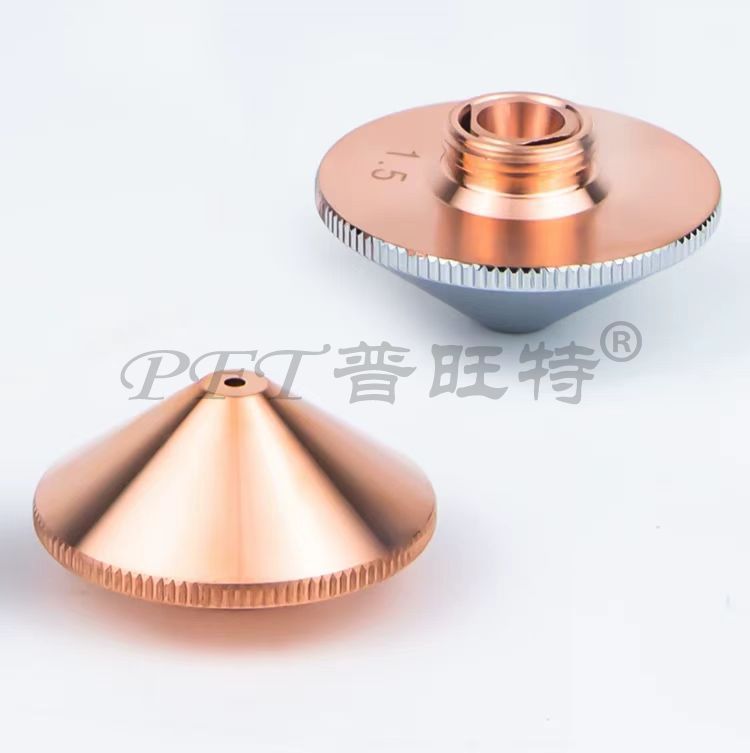
Conical nozzles feature a tapered bore that narrows from the inlet to the outlet. This design helps to concentrate the gas flow, increasing the pressure at the cutting point. Conical nozzles are versatile and can be used for cutting a wide range of material thicknesses, from thin sheets to medium-thick materials (3mm to 12mm). They are particularly effective for cutting carbon steel, stainless steel, and aluminum, as the concentrated gas flow ensures better dross removal and a smoother cut edge.
3. Diffuser Nozzles
Diffuser nozzles have a unique design with a wider inlet that gradually narrows into a straight or slightly tapered outlet. This design reduces the gas velocity while increasing the gas volume, making them ideal for cutting thick materials (12mm and above). The diffused gas flow helps to prevent excessive turbulence, which can cause uneven cuts or damage to the material. Diffuser nozzles are commonly used in heavy industry applications, such as cutting thick steel plates for construction or machinery.
4. Specialized Nozzles
In addition to the above three main types, there are specialized nozzles designed for specific purposes. For example:
- Double-layer nozzles: These nozzles have an inner and outer gas channel, allowing for separate control of the gas flow. They are often used for cutting high-reflective materials like copper and brass, as the dual gas flow helps to reduce spatter and improve cut quality.
- Low-pressure nozzles: Designed for cutting materials that are prone to warping, such as thin aluminum sheets. The low-pressure gas flow minimizes the force applied to the material, preventing distortion.
How to Choose the Right Laser Cutting Nozzle
Selecting the right laser cutting nozzle depends on several key factors. By considering these factors, you can ensure that your fiber laser cutting machine operates at peak performance:
1. Material Type
Different materials require different nozzle designs to achieve optimal results. For example:
- Carbon steel: Conical nozzles are generally the best choice, as they provide a good balance of gas pressure and flow to remove molten steel effectively.
- Stainless steel: Diffuser nozzles or conical nozzles with a larger outlet diameter are often preferred, as they help to prevent oxidation and achieve a clean, bright cut edge.
- Aluminum and other non-ferrous metals: Specialized nozzles, such as double-layer nozzles, are recommended to handle the high reflectivity and prevent spatter.
2. Material Thickness
As mentioned earlier, the thickness of the material is a critical factor. Thin materials require a high-velocity gas flow (straight nozzles), while thick materials need a more diffused flow (diffuser nozzles). For medium-thick materials, conical nozzles offer the best versatility.
3. Laser Power
The power of your fiber laser cutting machine also influences nozzle selection. Higher power lasers generate more heat, which requires a nozzle that can handle increased gas flow to remove molten material efficiently. In general, higher power lasers may require larger nozzle outlets to accommodate the higher gas volume.
4. Cutting Speed and Precision Requirements
If you need high cutting speeds, a straight nozzle with a small outlet diameter can provide the necessary gas velocity. For applications where precision is paramount, such as cutting intricate shapes, a conical nozzle with a smaller outlet may be more suitable, as it offers better control over the gas flow and reduces the risk of overcutting.
5. Assist Gas Type
The type of assist gas used (oxygen, nitrogen, compressed air) can also affect nozzle selection. Oxygen is often used for cutting carbon steel, as it supports combustion and increases cutting speed. Nitrogen, on the other hand, is used for cutting stainless steel and aluminum to prevent oxidation. The nozzle design should be compatible with the gas type to ensure optimal flow and pressure.
Maintenance Tips for Laser Cutting Nozzles
To ensure consistent performance and extend the lifespan of your laser cutting nozzles, regular maintenance is essential:
- Clean the nozzle regularly: Remove any debris or spatter that may accumulate on the nozzle tip, as this can disrupt the gas flow and affect cut quality.
- Inspect for damage: Check the nozzle for cracks, wear, or deformation. A damaged nozzle should be replaced immediately to avoid poor cutting results or damage to the laser cutting machine.
- Store nozzles properly: Keep nozzles in a clean, dry place to prevent contamination or corrosion.
Conclusion
Choosing the right laser cutting nozzle is a critical step in achieving high-quality, efficient laser cutting results. By understanding the different types of nozzles and considering factors such as material type, thickness, laser power, and cutting requirements, you can select the perfect nozzle for your fiber laser cutting machine.
At PFT Laser (河北普飞特智能有限公司), we are committed to providing our customers with not only high-quality fiber laser cutting machines, handheld laser welders, and laser cleaning machines but also the knowledge and support to optimize their cutting processes. If you have any questions about laser cutting nozzles or need assistance in selecting the right one for your application, please feel free to contact us. Our team of experts is always ready to help you achieve the best possible cutting results.