Laser Welding Machine Buying Guide: Power, Materials, and Applications
Use this practical guide to compare 1500W, 2000W, and 3000W laser welding machines for stainless steel, carbon steel, aluminum, and production work.
A laser welding machine should be selected around joint design, material, thickness, production volume, and operator workflow. Power is important, but cooling, wire feeding, wobble control, safety, and application support determine whether the machine is suitable for repeatable work.
1. Define the joint and material
Confirm whether you weld lap joints, butt joints, corners, or parts with fit-up gaps. List stainless steel, carbon steel, galvanized sheet, aluminum, copper, or other materials separately because reflectivity, heat conduction, and surface condition change the process window.
2. Choose a practical power range
For many handheld applications, 1500W systems suit lighter fabrication, 2000W systems provide additional thickness capacity, and 3000W systems are used when higher output and wider process capacity are needed. The correct selection must be validated against your actual joint, material, thickness, wire, and required finish.
3. Compare cooling and wire-feeding options
Air-cooled machines can simplify mobility and maintenance for suitable workloads. Water-cooled systems may be preferred for longer industrial duty cycles. Automatic wire feeding helps fill gaps and build wider welds, while dual-wire equipment should be selected only when the application needs its additional process capability.
4. Confirm safety and training requirements
Laser welding requires an appropriate controlled work area, protective equipment, interlocks or enclosure requirements, fume extraction, and trained operators. A supplier should explain the safety configuration for the destination and intended installation rather than treating safety as an optional accessory.
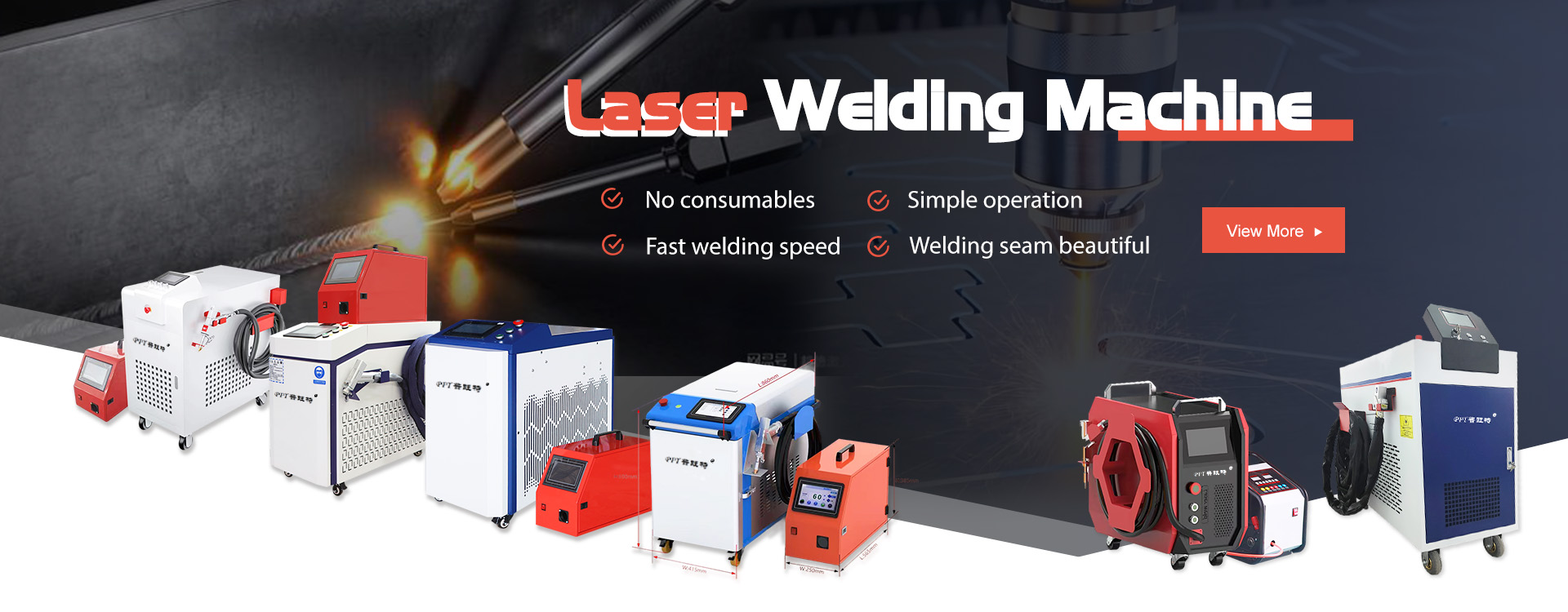
Laser welding machine options from PFT
Start with the laser welding machine range, compare the 1500W 3-in-1 handheld model, the 2000W model, and the 3000W model. For industry-specific guidance, review the automotive manufacturing solution and request a laser welding machine quotation.
Buyer checklist
- Material and thickness range
- Joint type and maximum fit-up gap
- Welding speed and appearance requirements
- Air-cooled or water-cooled duty cycle
- Single-wire or dual-wire requirement
- Factory safety, power, extraction, training, and destination requirements
Send sample parts or clear drawings with your inquiry when possible. The application team can then confirm a configuration and current lead time based on the selected machine, options, quantity, and shipping destination.