Laser Cutting Machine Factory Acceptance Test: A Buyer’s Sample and Evidence Checklist
Define samples, inspection methods, timing boundaries and evidence before accepting a laser cutting demonstration.
A useful factory acceptance test checks whether the quoted laser cutting configuration can produce your agreed parts under recorded conditions. It should identify the drawings, material, setup, measurement methods and acceptance criteria before the demonstration begins. A cutting video, a single attractive part or a maximum-thickness statement is not the same as an acceptance record.
This checklist is a purchasing framework. The buyer and supplier should adapt it to the agreed contract and have the relevant engineering and safety personnel define the requirements. It supplies no default tolerances, standard cutting settings or certification claim.
Define the purpose of the test
Decide what you need the factory test to establish. Is the concern repeated dimensional quality, a particular material, fit in a later assembly, handling time, or the complete delivery scope? Name each concern and assign an evidence item to it.
Separate a feasibility trial from a contractual acceptance test. A feasibility trial explores whether a process can make a part. An acceptance test evaluates an agreed configuration against requirements established beforehand. The same demonstration may contribute to both, but an exploratory success should not quietly become a guarantee covering all later production.
Also distinguish factory checks from installation checks. A factory demonstration cannot prove that your site utilities, extraction, material-handling routes and work practices are suitable. Record which checks will be repeated or completed after installation.
Freeze the sample specification before the trial
Identify each part by drawing number and revision. Attach the drawing in a format the supplier can review and keep the original dimensional requirements visible. If the cutting program has been changed to make a demonstration easier, record the change and obtain agreement before treating the part as equivalent.
Provide the material grade, thickness, stock format and surface condition. Note coatings, protective films or other conditions that affect the job. Agree who supplies the material and how its identity will be recorded. If the demonstration material differs from your production stock, label the result as a different trial.
Choose representative features. A test plate containing only easy straight cuts may miss the small holes, corners, narrow sections, long contours or part-separation difficulties present in your actual drawings. Let engineering select the features that need evaluation rather than designing a demonstration around appearance alone.
| Record group | Information to agree before cutting | Evidence to keep |
|---|---|---|
| Part definition | Drawing ID, revision, feature list and intended use | Agreed drawing and approved program changes |
| Material | Grade, thickness, stock format and condition | Material identification and sample labels |
| Machine | Exact configuration and relevant quoted options | Configuration sheet and equipment identification |
| Processing setup | Power setting, gas, nozzle, focus reference and cutting program | Setup record with units and version references |
| Quality | Critical dimensions, finish requirements and inspection method | Results tied to the labelled parts |
| Production cycle | Timing boundaries and accepted-part definition | Continuous timing log and reason-coded pauses |
| Delivery scope | Included equipment, documentation and site-dependent work | Included/optional/buyer-supplied checklist |
Blank values in a template mean information still needs to be agreed. They should not be filled with generic numbers copied from a marketing page.
Record the process conditions needed to interpret the sample
Keep the machine identification, laser source and cutting-head configuration with the trial record. Record the selected process settings, including their units, and identify the cutting program or parameter-library version used. Ask the supplier to explain how focus values are referenced on that system; a number without its sign convention and reference point may be misleading.
Identify the assist gas, its supply arrangement and any purity information relied on for the test. Separate a requested gas pressure from a measured condition, and record where a measurement is taken if it matters to the acceptance requirement. Do the same for utilities that need confirmation at the buyer's site.
TWI's description of laser cutting links the material result to beam delivery, motion control and gas-assisted material removal. It provides process background, not a universal setting chart for your machine. TWI: laser cutting process.
Do not interpret an unrecorded setup as transferable to every material thickness. A parameter guide can help organise questions, but a verified production setting needs its own application conditions.
Define what counts as an accepted part
Specify critical dimensions and how they will be measured. Record the measuring equipment and any calibration information required by your quality system. Agree the measurement locations, the part condition during measurement and who reviews disputed results.
For edge quality, define the intended next operation. A part that will be welded, coated, bent or used as a visible finished component may need different checks. Record whether the evaluation occurs directly after cutting or after a named finishing operation. Keep reworked parts separate from parts accepted directly from the machine.
Photograph the relevant features with labels and a useful scale where appropriate. Keep the physical sample or another agreed traceable reference. Images can support a result, but they do not replace dimensional or functional checks that the purchase specification requires.
Ask engineering to decide whether an assembly-fit check belongs in the test. A hole-position result can look acceptable in isolation while still failing the fixture or mating-part requirement. Conversely, a visually rough feature may need a defined finishing step rather than an unsupported declaration that all cut parts must look identical.
Measure a complete production cycle
Use the same timing boundaries for competing proposals. Record material staging, loading, setup, cutting, unloading, sorting and inspection. If a supplier reports only beam-on time, retain that measurement but do not label it as complete-cycle time.
Identify how many parts were started, accepted without rework, accepted after rework, or rejected. Keep those definitions consistent throughout the comparison. Record ordinary stoppages and their causes rather than removing them from the footage without explanation.
For an exchange-table proposal, record actual overlapping activities and any table-exchange or safety waits. For a tube proposal, record clamping, support movement, unloading and the disposition of remaining stock. Follow the more detailed comparison questions in the platform-layout guide and tube-versus-combined guide when those architectures are involved.
Do not publish a cycle result as a general PFT benchmark. It belongs to the named configuration, material, drawing and recorded conditions.
Review safe demonstration and delivery scope
Have appropriately qualified personnel review how the demonstration will be conducted. Confirm who may enter the processing area, how the equipment's safeguards are used, and how fumes and other site hazards are controlled. Do not bypass a safeguard to obtain better camera footage or a shorter measured cycle.
OSHA's laser-hazards manual discusses beam controls and non-beam hazards. Its guidance is a reason to include safety review in the test plan; it is not evidence that the quoted machine meets every destination requirement. OSHA: laser hazards and controls.
Match the demonstrated accessories to the quotation. Record extraction, cooling, software, handling equipment and consumables as included, optional or buyer supplied. Keep the document list configuration specific. A company certificate image does not by itself establish the scope or validity of documentation for the particular system being purchased.
Close the test with an exception list
Finish with a signed or otherwise agreed result record. Each requirement should have a result, an evidence reference and a disposition: accepted, accepted subject to an agreed condition, or unresolved. State who will address each unresolved item and what evidence will close it.
Do not replace failed or incomplete items with a general statement that the demonstration was successful. If the configuration changes after the test, identify which results need review or repetition. Preserve the original evidence rather than relabelling it as a test of the changed machine.
Keep the record with the configuration and delivery documents. That makes it possible to compare commissioning results with the same drawings and acceptance definitions after the equipment arrives.
Common acceptance-test questions
Is a video enough for remote factory acceptance?
A video can support a remote review if it is tied to an agreed drawing, configuration, timing log and measured results. It does not replace missing quality evidence or the buyer's agreed acceptance process. Decide beforehand which checks need physical samples, an independent witness or on-site inspection.
Can a thickness chart replace testing my parts?
No. A chart describes stated process conditions; it may not cover your features, surface condition, finish requirement or production cycle. Use it to choose trial questions, then evaluate representative parts.
Should the factory test also approve the installation site?
Treat factory and site checks separately. Document what the factory test establishes and what remains dependent on site utilities, layout, extraction, training and commissioning.
Send an acceptance-focused inquiry
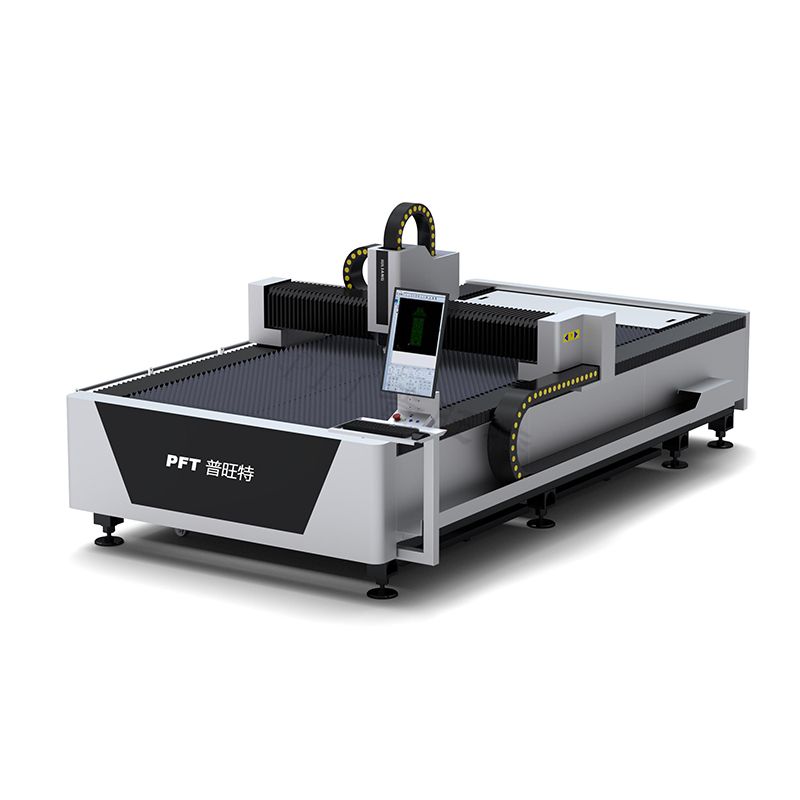
Browse the fiber laser cutting category and the PFT-3015 sheet cutter or PFT tube cutter relevant to your job. Send a quotation request with drawing revisions, material information, critical features, acceptance methods, timing boundaries and destination requirements. Ask the supplier to propose a test plan against that information rather than promising a result before the application has been reviewed.