
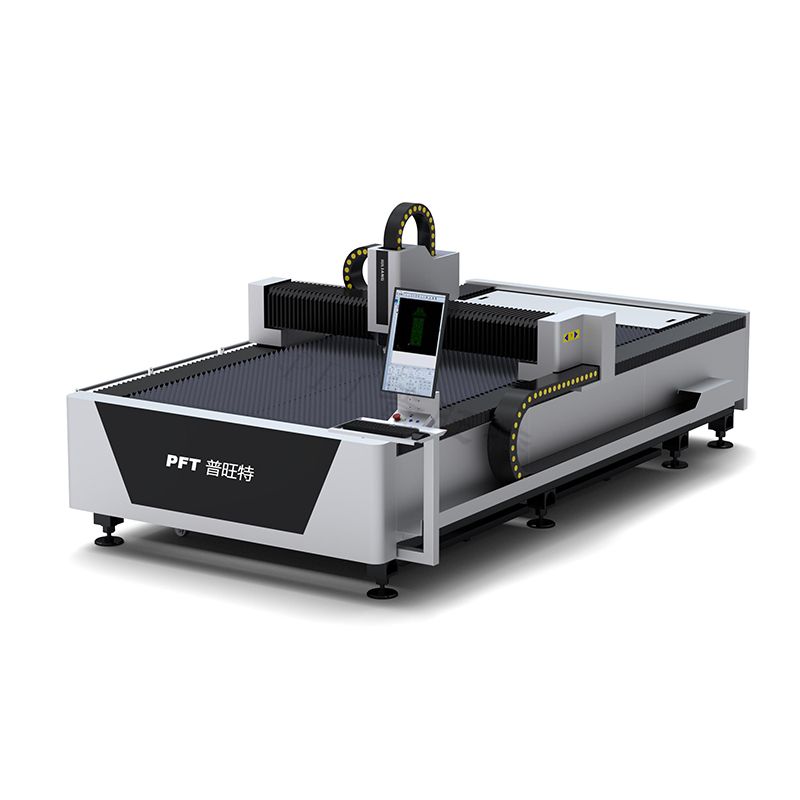
Single-Platform vs Exchange-Table Laser Cutting: Compare the Whole Production Cycle
Compare complete production cycles, handling, installation scope and application evidence before choosing a sheet-cutting layout.
A single-platform fiber laser cutter and an exchange-table machine should be compared using the same parts, material mix and production schedule. An exchange table can let material handling overlap with cutting when the supplied design and safety sequence permit it. Whether that helps your factory depends on how long loading, sorting and downstream work actually take. The table arrangement alone does not establish productivity, and an enclosure does not by itself establish a particular laser safety classification.
This guide helps a purchasing team decide what to measure before choosing a sheet-cutting layout. It complements the broader fiber laser cutting machine buying guide, which covers materials, power and utilities.
Separate table layout from enclosure design
Two separate questions are often combined in a quotation: how sheets move through the machine, and how the process area is guarded.
For table layout, ask whether the equipment has one working table, interchangeable tables, or another loading arrangement. Ask which activities may occur at the same time, what stops them, and who performs each task. A drawing showing two tables is not a timed production demonstration.
For guarding, request the configuration-specific description of the housing, access doors, viewing arrangements, interlocks and extraction system. The accessible-emission classification must relate to the complete supplied system and its intended operating modes, rather than being inferred from a photograph or the laser source alone.
Keep those answers in separate columns of your comparison. That prevents a supplier's enclosure description from standing in for evidence about cycle time, or its table arrangement from standing in for a safety assessment.
| Decision | Single-platform quotation: ask for | Exchange-table quotation: ask for |
|---|---|---|
| Normal production cycle | Cutting, unloading and reloading sequence | Cutting, exchange, unloading and loading sequence, including interlock waits |
| Material handling | Loading access, sheet support and lifting method | Access to each table, staging areas and permitted simultaneous activities |
| Space | Installed layout with service and handling clearances | Complete footprint with moving-table paths and handling clearances |
| Staffing | Tasks assigned to the operator and any helper | Who prepares the next sheet and sorts the previous sheet |
| Safety and extraction | Controls and extraction for the supplied configuration | Controls across both the cutting and material-handling areas |
| Maintenance | Access, support requirements and inspection tasks | The same items plus the exchange mechanism and its service access |
These are quotation questions, not guaranteed differences between all machines. Particular designs can change the answer.
Build a job mix that resembles your factory
Use recent orders rather than only the largest sheet or thickest material you have ever processed. Select representative drawings with the small holes, long contours and part-handling difficulties that recur in normal work. Include a frequent job and a job that regularly disrupts the schedule.
For each job, record the material grade, thickness, sheet format, parts per sheet, required finish and next operation. Distinguish repeat production from prototypes. Record whether the incoming sheet needs inspection or surface preparation, and whether completed parts can be lifted together or must be removed individually.
This matters because the same cutting layout can be evaluated very differently by two factories. One may have a steady supply of prepared sheets and a dedicated sorting operator. Another may rely on one operator to receive material, program the machine, sort parts and move them to a press brake. Those are different production systems even if they buy the same machine.
Do not turn this job mix into a universal claim that one architecture is best for a particular material or power. Its purpose is to make your own comparison reproducible.
Time the complete cycle, not only the cutting footage
Request a demonstration with a visible start and finish for each activity. Keep the clock running through ordinary pauses and record their reasons. A useful timing log separates:
- Material identification, staging and loading.
- Program selection, origin checks and setup.
- Piercing and cutting the agreed nest.
- Any table movement and safety sequence.
- Unloading, part separation and scrap removal.
- Inspection, sorting and movement to the next operation.
On an exchange-table design, record when loading and unloading actually occur relative to cutting. Do not add every activity's duration if some genuinely overlap. Equally, do not assume perfect overlap when the same operator must perform two activities at once. The elapsed start-to-start cycle is the useful observation.
TWI describes laser cutting as a process involving the beam, motion control and material interaction. This is useful background for separating processing conditions from the surrounding handling workflow. Its general description is not a PFT performance test. TWI: how laser cutting works.
Compare accepted output as well as elapsed time. A faster cycle that produces parts requiring extra rework may not improve the next stage of production.
Ask what happens outside the ideal demonstration
A quotation should explain how the machine handles everyday interruptions. Ask what the operator does when a part tips up, a sheet is incorrectly placed, a cut part is difficult to remove, or the next sheet is not ready. Ask how the schedule changes when material thickness or sheet format changes between orders.
Then walk the proposed layout. Can the agreed lifting method reach the loading area? Is there space to place scrap and accepted parts separately? Can service personnel reach the equipment without moving production stock? Will the handling route cross another machine's work area?
Have the appropriate site safety personnel assess the installation. OSHA's laser-hazards manual discusses engineering controls, controlled areas and non-beam hazards, including fumes. It supports asking for a complete installation assessment; it does not certify a machine or replace the rules applicable at your destination. OSHA: laser hazards.
Compare installed scope before comparing prices
Put both quotations onto the same scope sheet. Identify the supplied machine configuration, laser source, cutting head, software, cooling, extraction and material-handling equipment. Mark items as included, optional, buyer supplied or still unconfirmed. Ask which demonstration configuration matches the proposed purchase.
Compare the costs that your purchasing team can document: equipment, site preparation, utilities, handling, agreed training, service arrangements and consumables. Keep the reporting period and currency consistent. Do not copy another factory's electricity price, staffing cost or return-on-investment estimate into your own comparison.
If the production difference cannot yet be measured, record it as unresolved. A measured cycle, an installation drawing and a defined scope are more useful than a guessed payback period.
Questions to settle before issuing the purchase specification
Does an exchange table always increase output?
No universal increase follows from the table arrangement. Ask whether the proposed handling activities can overlap with cutting on your job mix, and whether staffing and downstream capacity support that overlap. Use measured accepted output and elapsed cycles to evaluate the proposal.
Does an enclosed machine automatically remove the need for a site safety review?
No. Request the classification and safety information for the complete configuration, including operation, loading and service access. The installation and work practices still need to be assessed for the site.
Is the smallest footprint always the easier installation?
The machine outline is only one part of the layout. Include loading equipment, moving components, service access, extraction and the routes used to move material and finished parts. Compare the usable installation, not only the shipping dimensions.
Prepare a configuration request
Compare the PFT-3015 single-platform product page with the PFT enclosed exchange-platform product page. Use each page's configuration questions to identify what remains to be confirmed for your application.
For a configuration quotation, include your representative drawings, sheet formats, material and thickness mix, production schedule, handling method, available floor plan and destination utilities. Ask for the same cycle-timing and acceptance record for both proposed layouts. This guide supplies a comparison method; final capability, included safety equipment, commercial terms and delivery dates must be confirmed in the quotation.
