Handheld Laser Welding vs TIG: Which Process Fits Production?
Compare handheld laser welding and TIG by speed, heat input, skill requirement, joint fit-up, finish, and total production cost.
Choosing between handheld laser welding and TIG is a production decision. TIG remains useful for thin, high-appearance joints and difficult positions. A handheld laser welding machine can reduce heat input and shorten cycle time on stainless steel, carbon steel, and many production assemblies, provided the joint, fit-up, and safety setup are suitable.
1. Compare the process window
TIG gives the operator fine control over heat, filler, and puddle. Laser welding delivers concentrated energy with a smaller heat-affected zone. If parts have large gaps, dirty surfaces, or highly variable fit-up, TIG may still be more forgiving. If joints are prepared and repeatable, laser welding is often faster to train and faster to run.
2. Look at speed, distortion, and finish
For many shop jobs, handheld laser welding can complete a joint with less post-grinding than TIG because the weld bead is narrower and distortion is lower. The real result still depends on material, thickness, joint design, wire feeding, and operator technique. Ask for a sample weld on your actual joint instead of relying on a general speed claim.
3. Count skill, safety, and operating cost
TIG usually needs a skilled welder and more finishing time. Laser welding still needs trained operators, laser-safe work areas, eye protection, and fume extraction. The capital cost of a laser welding machine is higher; the operating case should include labor, rework, consumables, training, and expected duty cycle.
4. When laser welding is the better next step
- Repeatable stainless-steel or carbon-steel assemblies
- Joints that currently need too much TIG time or grinding
- Work that can use wire feeding for gap filling
- A factory ready to control the laser work area and extraction
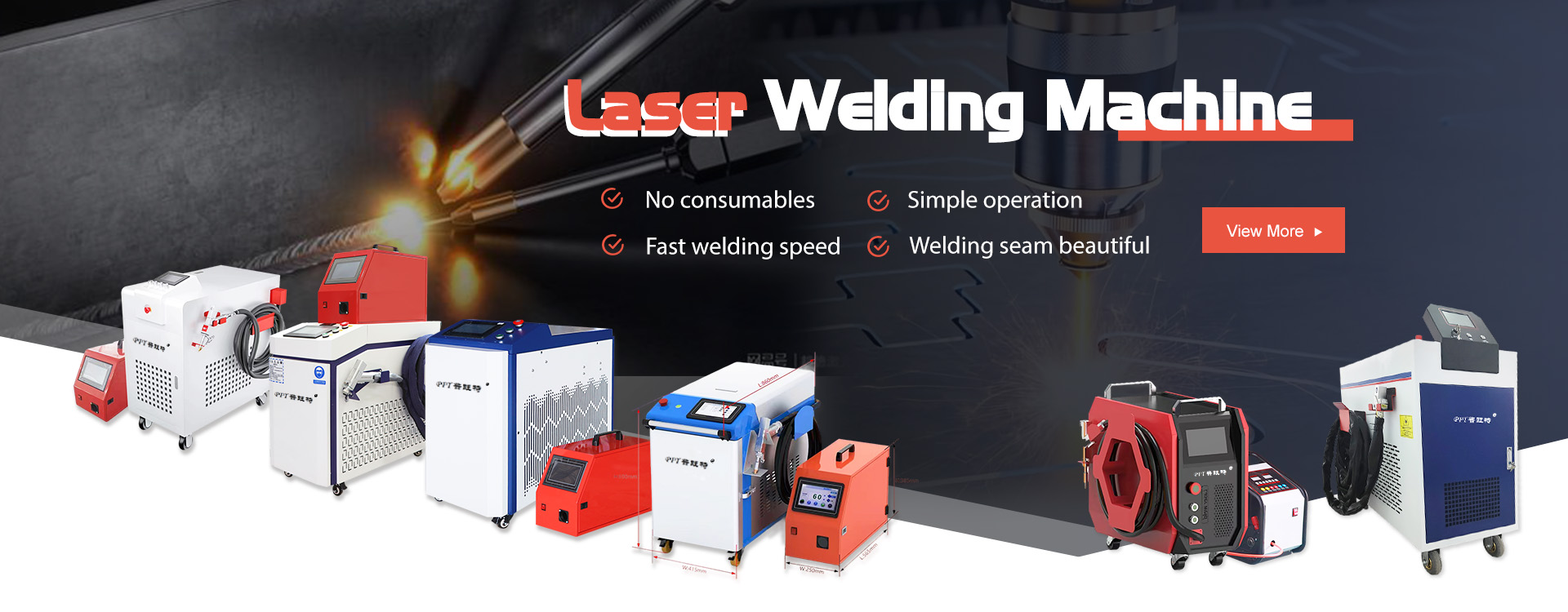
Handheld laser welding options from PFT
Compare the laser welding machine range, including the 1500W 3-in-1 handheld model and the 2000W handheld model. For production context, review the automotive manufacturing solution and request a laser welding machine quotation.
Buyer checklist
Send joint photos or drawings, material, thickness, current TIG cycle time, appearance requirement, expected monthly volume, and destination. The application team can then confirm whether handheld laser welding is a practical replacement, a complement to TIG, or not yet suitable.