
Air-Cooled vs Water-Cooled Laser Welder: Operating Cost & ROI Breakdown
Detailed hourly operating cost model and investment ROI breakdown comparing portable air-cooled and industrial water-cooled handheld laser welding machines.
When purchasing a handheld laser welding machine, the headline machine price represents only one component of your total ownership cost. The true economic decision between air-cooled and water-cooled laser welders depends on hourly running expenses—electricity, shielding gas, wire feed, protective lenses—and continuous duty cycle in your shop.
1. Hourly operating cost breakdown: Air-cooled vs Water-cooled
The following cost model evaluates 1500W and 2000W models running a typical 40-hour work week in fabrication operations (electricity priced at $0.15/kWh, high-purity Argon gas at $0.05/liter):
| Cost Factor | 1500W Air-Cooled (PA-1500) | 2000W Water-Cooled (PFT-2000) | Cost Difference Basis |
|---|---|---|---|
| Power Consumption | 4.2 kWh ($0.63 / hr) | 6.8 kWh ($1.02 / hr) | Water chiller compressor consumes +2.2 - 2.6 kW additional power |
| Shielding Gas (Argon) | 12 - 14 L/min ($2.10 / hr) | 14 - 16 L/min ($2.40 / hr) | Equivalent gas nozzle shielding; optimized gas delay reduces waste |
| Protective Lens Wear | $0.40 / hr (replacement per 40 hrs) | $0.35 / hr (replacement per 50 hrs) | Water-cooled torch heads run 8-12°C cooler, extending optic life |
| Welding Wire (0.8-1.2mm) | $1.80 / hr (stainless/carbon) | $1.80 / hr (stainless/carbon) | Auto wire feeder consumes identical filler material |
| Coolant / Maintenance | $0.05 / hr (air filter cleaning) | $0.25 / hr (deionized water + biocide) | Water chillers require quarterly filter and coolant flushes |
| Total Direct Operating Cost | $4.98 / hour | $5.82 / hour | Air-cooled saves ~$0.84/hr primarily in chiller electrical load |
2. Duty cycle and physical workload comparison
While an air-cooled laser welder delivers lower hourly running power costs, cooling physics determine its operational boundaries:
- Continuous Heavy Duty (3 Shifts): A water-cooled system with an industrial dual-temperature chiller maintains the fiber laser diode and optical head within ±0.5°C, ensuring uninterrupted operation in ambient temperatures up to 45°C. For continuous batch manufacturing of stainless tanks, cabinets, and chassis, water cooling is required.
- Mobility and On-Site Installation: Air-cooled units weigh only 38-45 kg (compared to 120-160 kg for water-cooled units). They can be easily transported in a service van for construction sites, decorative metal fitting, and field repairs without water tank spills or freezing hazards in sub-zero climates.
3. TIG Replacement ROI Payback Period
Replacing conventional TIG welding with a handheld laser welder typically delivers a payback period of 5.5 to 8 months through two measurable savings factors:
- 3× to 4× Speed Multiplier: A laser welder completes 1.5mm stainless joints at 1.2 m/min compared to 0.3 m/min for skilled manual TIG welding.
- 80% Reduction in Post-Weld Grinding: Heat input is localized, producing smooth, silver weld beads that eliminate secondary angle grinding and electrolytic cleaning hours.
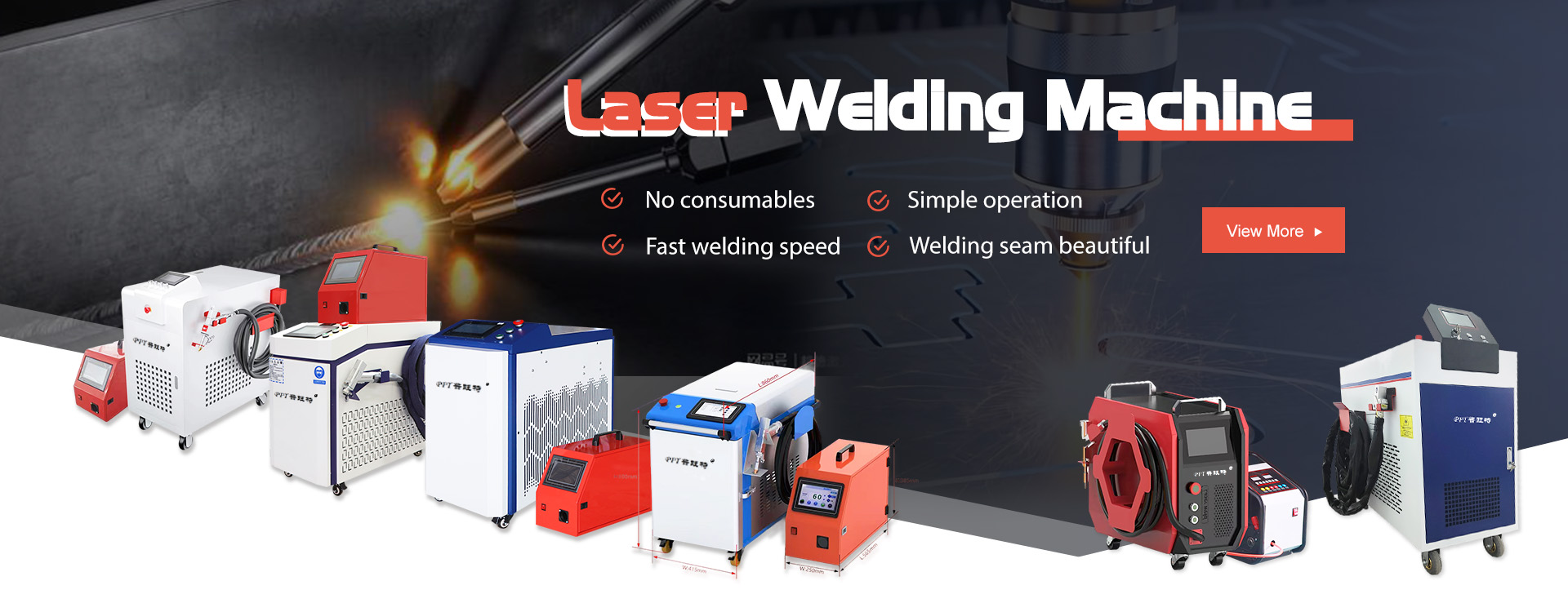
Handheld laser welding solutions from PFT
Review the portable PA-1500 portable air-cooled laser welder, compare the industrial 1500W 3-in-1 water-cooled system, or inspect the high-output 3000W industrial welder in our laser welding machines range. Submit your joint requirements for an itemized operating cost calculation and quote.