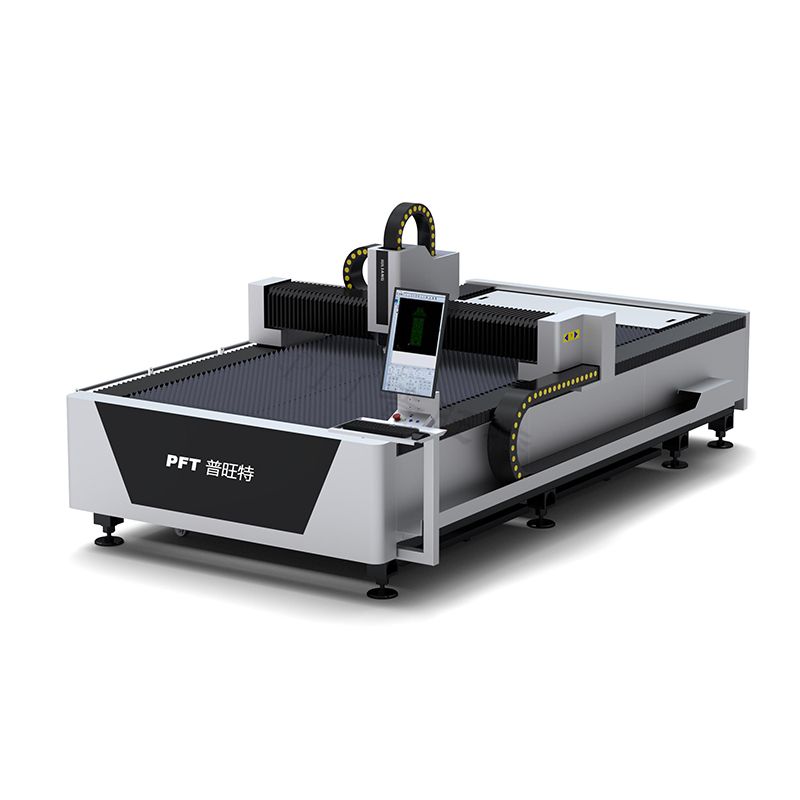

Dedicated Tube Laser vs Sheet-and-Tube Laser: Match the Machine to the Work Schedule
Build separate sheet and tube job lists, then compare scheduling, clamping, support, material yield and changeover evidence.
A dedicated tube laser and a combined sheet-and-tube laser should be compared against the work they must complete in the same production period. A combined machine may consolidate purchasing and floor space for suitable workloads. A dedicated tube system may be worth evaluating when tube work needs its own production capacity or specialised handling. Neither conclusion follows from the machine name alone: clamping, support, part geometry and the proposed operating sequence need confirmation.
Start with the existing fiber laser cutting procurement guide if you still need to define materials and utilities. This article focuses on a different decision: whether sheet and tube work should share equipment.
Write two job lists before comparing machines
Create one list for sheet jobs and one for tube jobs. For sheets, record material grade, thickness, sheet format, drawing revision, quantity and required downstream operation. For tubes, add cross-section, outside dimensions, wall thickness, stock length, finished-part length and any holes, slots or end cuts.
Record when each job is needed, not only the monthly total. Sheet and tube orders that must run at the same time create a different scheduling question from work that can be completed in separate batches. Mark urgent jobs and routine jobs separately.
Also identify what happens after cutting. A tube that fits a welding fixture without adjustment may be more valuable than a visually impressive cut that requires another setup. A sheet part may be delayed by sorting or bending even when laser capacity is available. Include those constraints in the decision.
Avoid selecting equipment solely around an occasional maximum diameter or the highest power available. Ask suppliers to demonstrate the repeated work and the awkward features that drive your actual cost and schedule.
Confirm what “combined” means in the proposed configuration
A product described as sheet-and-tube can use different arrangements. Request a layout and an operating sequence for the exact machine under consideration. Ask whether the two tasks share the laser source, cutting head, controls, loading access or other resources, and which activities can occur simultaneously.
Do not assume simultaneous sheet and tube cutting. Ask the supplier to identify the permitted sequence and demonstrate it. If the quotation states separate operating modes, measure the change between them using normal shop procedures rather than only a software selection.
| Purchase question | Evidence to request | Why it matters to the decision |
|---|---|---|
| Can both workloads meet their due dates? | A schedule using the agreed job lists and measured task times | Shared capacity may put two order streams into one queue |
| What changes between sheet and tube work? | Recorded mode-change procedure and required fixtures or setup checks | Frequent changes can consume time that a cutting-only comparison misses |
| What tube shapes can be supported? | Configuration-specific clamping and support information | A broad diameter range does not establish support for every profile |
| What is the usable length? | A nest showing loading, clamping, supports, finished parts and remaining stock | Nominal stock length does not describe every usable cut position |
| How do parts leave the machine? | An unloading demonstration using representative parts | Long, heavy or small parts can need different handling |
| Can bevels or other special cuts be made? | Written option scope and an agreed sample | Additional capability should not be inferred from an ordinary tube-cutting description |
The comparison should use the quoted equipment, not an unrelated demonstration machine with additional options.
Treat clamping and support as application questions
Give the supplier a cross-section drawing with the dimensions and material condition that matter. Include welded seams, coatings, straightness requirements and any variation in supplied stock. Ask how the proposed chuck and supports contact the profile, and how they avoid unacceptable deformation or interference with required features.
For a short finished part, ask where the final cuts occur relative to the chuck. For a long finished part, ask how it remains supported as cutting progresses and how it is unloaded. Ask the supplier to identify restrictions rather than interpreting the largest supported stock dimension as a promise about every part.
TRUMPF's tube-machine documentation describes a particular clamping and support design. It illustrates why those components deserve examination in a tube-machine purchase. Its listed features and performance belong to that manufacturer's configuration and must not be attributed to PFT equipment. TRUMPF: tube clamping and support example.
For the PFT proposal, request the corresponding details in the quotation and sample record. Do not use a competitor's specification as a substitute for evidence about the machine you will buy.
Measure remaining stock instead of accepting a “zero tail” slogan
Ask the supplier to show how much incoming stock becomes accepted finished parts in the proposed nest. Separate useful remnants that can be reused from material that cannot be processed or recovered under that setup. Record why stock remains: clamping requirements, part geometry, nesting decisions, loading limits or another restriction.
Agree the measurement method before the test. State whether the reported value covers only a final clamped length, all cutting losses, or the complete difference between incoming stock and accepted parts. Those are different quantities.
A claim about a very short tail on one part does not establish material yield for a different profile or production nest. Likewise, a short remainder is not useful if the resulting parts fail the agreed dimensional or assembly check. Evaluate the complete material balance alongside quality.
Compare schedules with changeovers included
Build a sample production schedule using the job lists. Include setup, loading, cutting, unloading, inspection and changes between workloads. Where an activity overlaps another, record that overlap from the demonstration. Where two tasks need the same operator or machine resource, show the resulting queue.
Then test a disruption that is relevant to your factory: an urgent tube order, a late sheet delivery, a tooling change or a job that needs to be rerun. Ask how each proposed arrangement would recover the schedule.
A separate tube machine does not guarantee better output. A combined machine does not guarantee lower overall cost. The result depends on your workload, the quoted configuration and the resources around it. Keep assumptions visible so purchasing, production and engineering can review the same comparison.
Write the sample acceptance criteria
Choose drawings that expose real production requirements: hole position, end-cut geometry, orientation between features, part length and fit in the next fixture. Ask your engineering team to specify the applicable tolerances and measurement method. Keep a labelled sample and a record of the setup used to produce it.
Include loading and unloading in the demonstration. Record how accepted parts, scrap and useful remnants are separated. If a special profile or bevel capability is essential, make it a named test rather than leaving it inside a general statement about tube compatibility.
The same principle applies to the proposed sheet mode. Confirm that sheet production remains suitable while evaluating tube capability; do not let an attractive tube demonstration replace the sheet comparison.
Questions buyers often ask
Can a combined machine cut sheet and tube simultaneously?
Treat that as a configuration-specific question. Request the operating sequence and shared-resource list. Confirm simultaneous capability in writing if it is required, and demonstrate the proposed sequence before relying on it in your schedule.
Should every shop with frequent tube work buy a dedicated tube laser?
Frequency alone is insufficient. Compare the due-date pattern, job geometry, loading arrangements, accepted-part output and changeover requirements. A measured schedule is more useful than a universal buying rule.
Does a tube-diameter specification cover square and special profiles?
Do not assume it does. Provide each cross-section and outside dimension, then request confirmation of clamping, support, cutting access and unloading for that profile.
Request a comparison using your drawings
Use the PFT tube laser product page and PFT sheet-and-tube product page as starting points. Related equipment is available in the fiber laser cutting category.
Send a configuration inquiry with your sheet and tube job lists, profile drawings, stock lengths, required features, production schedule and floor plan. Ask for a demonstrated operating sequence, material-balance record and acceptance criteria for each proposal. This decision framework does not promise a particular yield, simultaneous processing capability or financial return.