Fiber Laser Cutting Cost per Part: A Buyer's Guide to Gas, Power and Yield
Estimate the cost of fiber laser cutting per accepted part, with an illustrative calculation covering material, gas, electricity, labor and yield.
The cost of fiber laser cutting is the total cost of a defined job divided by the number of acceptable parts it produces. A useful estimate includes the material, machine time, electricity, assist gas, labor, consumables and any finishing or quality work. Quoting a cutting speed or an hourly rate alone does not tell a buyer what a finished part will cost.
This guide gives equipment buyers a way to compare proposals using the same material, nest, quality requirements and accounting boundaries. The calculation is an illustrative method, not a quote, a statement of PFT Laser machine performance, or a substitute for a test on your own parts.
Start with cost per accepted part
Use this simple relationship:
Cost per accepted part = total job cost ÷ number of accepted parts
For a useful comparison, define the job before collecting prices:
- Choose the material grade, thickness, sheet size and surface condition.
- Supply the drawing, required quantities and acceptable dimensional and edge quality.
- Use the same nest, number of pierces and loading method when comparing suppliers.
- State which costs are included in each hourly rate and which will be added separately.
- Record the number of accepted pieces as well as the number cut.
The denominator matters. If 200 parts are cut but ten are rejected, the cost of the whole job must be recovered across the 190 usable parts. A price per cut part can make an unreliable process look cheaper than it is.
What belongs in a laser cutting cost estimate?
| Cost item | What to include | What to ask or measure |
|---|---|---|
| Material | Sheets consumed, including the portion that becomes scrap or rejected work | Delivered sheet cost, nest yield and any realistic scrap recovery |
| Machine and facility allocation | Equipment recovery and the agreed share of maintenance or overhead | What is already included in the hourly rate; which hours are charged |
| Electricity | The energy used by the defined cutting cell | Metered kWh for the job, or a measured average for the same operating conditions |
| Assist gas | Gas delivered to the machine, plus the allocated costs of its supply | Metered volume, gas price, delivery and rental terms on the same volume basis |
| Labor | Programming, setup, loading, unloading, inspection and handling as applicable | Paid time and the share attributable to this job |
| Consumables | Nozzles, protective windows and other items consumed over time | Replacement interval and cost allocated to the job |
| Quality and finishing | Deburring, cleaning, inspection and rework required by the part specification | Time, consumables and reject counts for the same quality standard |
Not every business accounts for these items separately. A fully loaded machine rate may already contain labor, energy, maintenance and overhead. If so, do not add those costs a second time. A machine purchase decision may also require capital, financing, installation, taxes and service assumptions that are not captured in a simple job estimate.
Worked example: 200 parts from two sheets
The numbers below are invented for illustration. They are not measured PFT Laser data, an average market price, a production guarantee or a customer quotation. Replace them with your own measured time, utility rates, material price and acceptance results.
Assume a batch uses two sheets and produces 200 cut parts. A planned 95% first-pass acceptance gives 190 accepted parts. The scheduled machine time is 3.5 hours, including setup. The hypothetical job-level electricity and gas quantities already include whatever the example allocates to that batch.
| Item | Illustrative calculation | Batch cost |
|---|---|---|
| Material | 2 sheets × $120 per sheet | $240.00 |
| Machine and facility allocation | 3.5 hours × $30 per hour | $105.00 |
| Labor | 3.5 hours × $24 per hour | $84.00 |
| Electricity | 36 kWh × $0.15 per kWh | $5.40 |
| Assist gas | 60 m³ × $0.50 per m³, on the same stated reference basis | $30.00 |
| Consumables | Allocated amount for this batch | $9.00 |
| Finishing | Assumed zero for this example | $0.00 |
| Total | Sum of the items above | $473.40 |
$473.40 ÷ 190 accepted parts = approximately $2.49 per accepted part.
The $30 machine rate in this example covers an allocation for equipment and facility costs; it excludes the separately listed labor, electricity, gas and consumables. The example assumes no scrap credit, rework, extra inspection or finishing. Add those if they apply. If your rate already includes any separately listed item, remove the duplicate charge.
The calculation also shows why assumptions matter. If the same batch cost produced 196 accepted parts instead of 190, the cost would be about $2.42 per accepted part. If gas cost doubled while every other assumption and the 190-part yield stayed the same, it would be about $2.65. These are arithmetic illustrations, not predictions that either change is achievable.
Why a higher cutting speed may not reduce the total cost
The cutting head is only one part of the production cycle. A job can also include programming, sheet loading, piercing, acceleration between contours, unloading, sorting, inspection and handling rejected pieces. A more expensive configuration can reduce some of these steps, but the benefit depends on the work schedule.
For example, compare the same nest on a single-platform machine and an exchange-table machine. Record both cutting time and elapsed time from the start of one sheet to the start of the next, including actual handling. If one operator must stop to sort or load material, the table change alone does not represent the whole saving. See the single-platform versus exchange-table comparison for a fuller cycle-by-cycle comparison.
Ask each supplier for the machine configuration, program, material and test conditions behind its time estimate. Do not compare a programmed cutting speed from one proposal with a full shift's production from another.
How much does assist gas add to the job?
Assist gas helps remove molten material from the cut. Its cost depends on the gas, nozzle and process settings, the time gas is flowing, local supply arrangements and the finish the customer will accept.
| Gas option | Why a shop may consider it | What to check before comparing |
|---|---|---|
| Nitrogen | Often selected when limiting oxidation of the cut edge matters | Actual gas use, purity and pressure requirements, delivered price, tank rental or generation costs, and downstream finish requirements |
| Oxygen | Can support the cutting reaction on suitable steels | Edge condition, downstream cleaning or coating requirements, gas supply and the machine's approved process |
| Clean, dry compressed air | Can be an option for suitable materials and machine configurations | Compressor and drying capacity, electricity and maintenance, process compatibility, edge quality and oxidation |
TRUMPF explains that nitrogen or argon in fusion cutting shields the cut from air while removing molten material. In flame cutting, oxygen participates in the reaction. Bystronic also notes that compressed-air cutting can produce some oxidation. None of these general descriptions establishes a cutting setting or outcome for a particular PFT machine.
Ask for a test using the intended material and the required edge finish. A cheaper gas may still be more expensive per accepted part if it adds cleaning, coating preparation or rejects. Conversely, a nitrogen system's economics depend on delivered gas, equipment rental or generator ownership and utilization—not on gas price alone.
When comparing gas quantities, use the same reference conditions and units on the supplier's meter and invoice. Pressure at the machine is not itself a volume or a consumption rate. For a generator or compressor, account for power and maintenance once, rather than assuming air or generated gas is free.
Laser power is not the machine's electricity bill
A laser's rated optical power is not the same as the electrical energy used by an entire cutting cell. The source, motion system, chiller, extraction equipment and, where relevant, compressor or nitrogen generator can all contribute. Some may be supplied or metered separately.
The strongest comparison uses a meter or a documented measurement for the agreed job. If that is unavailable, ask what equipment the estimated electrical load includes, how it changes between cutting and idle, and how much time the job spends in each state. Multiply the relevant kWh by the tariff applicable to your facility. Do not turn laser-source wattage directly into a whole-factory cost without stating the assumptions.
Compare two machine quotations on the same basis
Before choosing a machine, put these questions in writing:
- Work: What materials, thicknesses, sheet sizes, drawings and quantities were used in the proposal?
- Configuration: Which source, table, cutting head, cooling, extraction and gas equipment were included? Which are optional or supplied by the buyer?
- Evidence: Were samples cut on the proposed configuration? What were the elapsed cycle, accepted quantity and measured edge results?
- Utilities: What power, air, gas and cooling requirements apply to that configuration at the installation site?
- Ownership: What delivery, installation, commissioning, training, spare parts and service items are included or excluded?
- Accounting: Does the quoted hourly figure include labor, electricity, gas, financing or maintenance?
Use the factory acceptance test checklist to agree on the sample and evidence before accepting a performance claim. For facilities planning, the installation requirements checklist covers the site information needed before the machine arrives.
Frequently asked questions
What is the largest running cost of a fiber laser cutter?
There is no universal largest item. The answer changes with material yield, labor, local utility rates, gas supply and how the machine is used. Compare costs per accepted part for a defined job instead of assuming that electricity or gas always dominates.
Should I use nitrogen, oxygen or compressed air?
Choose for the material, required edge quality, available equipment and measured total cost. Confirm that the proposed machine and gas system support the process, then compare test results and any downstream finishing. Do not switch gases solely on an advertised hourly saving.
Does a more powerful laser always cost less per part?
No. A higher-power configuration may change processing time or the work it can perform, but purchase cost, utilization, utilities, handling and quality requirements also affect the outcome. Compare the same parts and complete production cycle.
Is the purchase price the same as the installed cost?
No. Depending on the agreement, site work, lifting, electrical supply, gas equipment, extraction, installation and training may be separate. Ask suppliers to identify inclusions, exclusions and responsibilities in the quotation.
Discuss your parts and machine configuration
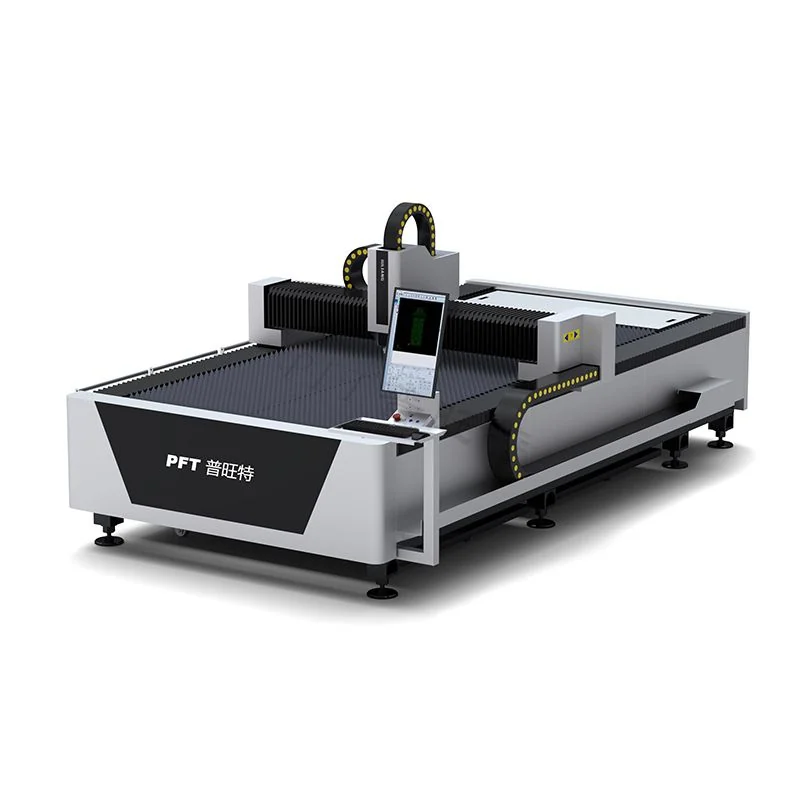
For sheet-metal work, start with the PFT-3015 single-platform fiber laser cutting machine, or review an enclosed exchange-platform configuration if your production plan calls for it. The suitable configuration, capabilities and scope of supply must be confirmed for your job.
To discuss an estimate, request a quotation and include your material and thickness, sheet size, drawing, target quantity, edge requirements, available utilities and destination. A comparable sample and an itemized scope are more useful than a generic hourly figure.