
Fiber Laser Cutting Machine Installation Requirements: Power, Gas, Extraction and Site Checklist
Prepare for a fiber laser cutting machine installation with a practical checklist covering the site, utilities, safety and acceptance responsibilities.
A fiber laser cutting machine needs more than a clear space on the factory floor. Before delivery, the buyer and supplier need to agree on the machine-specific layout, unloading plan, electrical supply, cutting gas and compressed air, cooling, fume extraction, safety measures and commissioning responsibilities.
This checklist helps equipment buyers ask for the right documents before ordering and prepare the site before the machine arrives. Actual values and safety requirements depend on the selected configuration, destination and facility. Do not use a generic cable size, gas pressure, floor thickness or ventilation rate as an installation specification.
What should be ready before a laser cutter arrives?
| Area | Information to obtain for the selected configuration | Who should confirm it |
|---|---|---|
| Layout and access | Crated dimensions and weight, lifting points, machine footprint and service clearances | Machine supplier, site owner and qualified rigging contractor |
| Floor and foundation | Loads, leveling or anchoring requirements and any foundation drawing | Supplier and a qualified site or structural professional |
| Electricity | Voltage, frequency, phases, maximum load, connection and protective requirements for all included equipment | Supplier and licensed local electrical contractor |
| Cutting gas | Supported gases, purity, delivery pressure and flow at the machine connection | Supplier and gas provider |
| Compressed air | Required pressure, flow and air quality; whether it is also used as cutting gas | Supplier and compressed-air provider |
| Cooling | Chiller scope, operating environment, coolant quality and service space | Supplier and site facilities team |
| Extraction | Machine connection and the contaminants, airflow and filtration design for the materials | Supplier and qualified extraction or safety specialist |
| Safety and commissioning | Guarding, laser and fire risk assessment, training and the agreed site acceptance test | Buyer, supplier and applicable local specialists |
Ask for the documents with the quotation, then confirm them again for the ordered machine. A different power source, table, enclosure, chiller or extraction arrangement can change the site plan. Until the final configuration is agreed, treat all utility figures as provisional.
1. Plan the delivery route and working space
The machine's cutting area is not the same as the footprint of the complete installation. Obtain a dimensioned layout showing the machine, electrical cabinets, chiller, extraction equipment, gas connections and the clearances needed for operation and maintenance.
Walk the entire route from the delivery vehicle to the final position. Check door openings, height restrictions, turning space, floor transitions, lifting access and the available capacity of the floor and handling equipment. Request the shipping dimensions and weight for each crate, not just the operating machine's dimensions.
Also allow room for sheet storage, loading equipment, finished parts, scrap removal and operator access. An exchange table can change the flow of material around the machine; compare its actual work cycle with a single-platform arrangement before finalizing the layout.
The supplier should specify the machine loads and any leveling or anchoring requirements. A qualified local professional should determine whether the actual floor and foundation are suitable. Avoid copying a foundation detail from another model.
2. Confirm the electrical supply for the whole cell
Request an electrical schedule for the machine and each separate item in the proposed installation. It should identify the required voltage, frequency, phase, connection points, maximum demand, protective devices, grounding or bonding and any site-specific constraints.
Do not size the incoming service by converting the advertised laser-source power alone. The source is only one component. The motion system, control cabinets, chiller, dust extraction and an air compressor or nitrogen generator may have their own loads or supply connections.
A licensed electrician should compare the supplier's schedule with the actual site service and applicable local electrical requirements. Agree who supplies and installs the disconnects, cables, transformer or voltage-conditioning equipment if required. Identify any facility limitations before signing off the layout.
For budgeting, keep connected load, actual energy consumption and the cost per accepted part separate. Our laser cutting cost guide explains why a machine's nominal laser power is not the whole electricity bill.
3. Specify cutting gas and compressed air separately
Ask the supplier which cutting gases the ordered machine supports for your intended materials. Obtain the required purity, pressure and flow at the machine connection under operating conditions, together with connection types and any equipment supplied with the machine.
Compressed air may be needed for machine functions even when nitrogen or oxygen is the cutting gas. Air may also be used as an assist gas on suitable configurations and jobs. These are separate requirements: confirm whether one system serves both uses, whether it has adequate flow during demand and which drying and filtration requirements apply. Oil, moisture or particles can affect the process and equipment; use the machine supplier's specified air quality.
For nitrogen or oxygen, ask the gas provider about storage, delivery, regulators, piping, maintenance and how the system will sustain the required flow and pressure. Include tank rental, gas delivery or generator operation in your ownership comparison. Bystronic's guide to assist gases discusses the trade-offs among nitrogen, oxygen and air; the appropriate choice still requires a test on your own material and finish requirements.
Treat gas storage and distribution as a site safety task. Oxygen equipment needs compatible components and must be kept free from oil and grease. Nitrogen can displace oxygen, especially in enclosed spaces. Involve the gas supplier and the facility's safety professionals in the layout, monitoring and emergency arrangements, and apply the rules for the destination. The U.S. Centers for Disease Control and Prevention discusses nitrogen's oxygen-displacement hazard in its guidance on cryogenic laboratory materials.
4. Check cooling and the operating environment
Confirm whether the quotation includes the chiller, hoses and connections. Ask for the required coolant type and water quality, operating temperature and humidity range, maintenance access and any precautions for shipping or storage in cold weather.
Place the chiller where it has the ventilation and service access specified by its manufacturer. Plan how the buyer will fill, inspect and maintain the cooling circuit, and confirm who is responsible for the first setup. Do not substitute untreated tap water or an antifreeze mixture without checking the applicable equipment instructions.
Dust, heat and humidity in the building can affect the installation and maintenance plan. If the machine will operate in a hot, dusty, corrosive or otherwise demanding environment, give those conditions to the supplier when requesting the final layout and utility schedule.
5. Design extraction for the actual material
Laser cutting can generate airborne contaminants. The appropriate extraction and filtration system depends on the machine, workpiece materials and coatings, cutting process, duct layout, filter choice, discharge arrangement and local requirements.
Give the extraction specialist the machine supplier's connection information and a list of the materials you expect to process. Discuss how the system will capture and handle the resulting fumes and dust, where filtered air will go, access for filter maintenance and any fire or combustible-dust concerns. The U.S. National Institute for Occupational Safety and Health describes laser-cutting hazards and the role of ventilation; the UK Health and Safety Executive also discusses fume exposure from metal cutting. Requirements must be checked for the installation's destination.
Do not assume that a fan specified for a different machine, or a duct sized only by its diameter, is adequate. Do not start cutting an unfamiliar coated or hazardous material until the facility has assessed the process and controls.
6. Agree on guarding, fire protection and operator training
The complete installation must be assessed for laser radiation, reflected beams, electrical energy, moving equipment, gases, fumes and fire. Guarding and interlocks should be installed and maintained as designed for the delivered configuration. Do not bypass a door switch or rely on generic eyewear as a substitute for the machine's protective system and a site risk assessment.
Agree who will provide operating and maintenance instructions, site-specific safety training and emergency procedures. Confirm the responsibilities for fire protection, access control and any applicable local compliance documentation. Ask for documents covering the actual model and delivered configuration; do not assume that a certificate or declaration for a different machine applies.
7. Separate factory acceptance from site acceptance
A factory acceptance test can establish what was demonstrated before shipment. A site acceptance test confirms what the delivered machine does after it has been installed with the buyer's utilities and agreed operating conditions. The second step is especially important because gas supply, electrical service, extraction, environment and handling can differ between locations.
Before shipment, agree on:
- The machine identity, installed options and equipment included in the delivery.
- The material, thickness, drawings, quantity and acceptance criteria for the sample.
- What will be recorded: setup, program, gas, relevant settings, elapsed time, dimensions, edge condition and accepted/rejected parts.
- Who will provide the utilities, tools, operator and test material at the site.
- How outstanding items will be documented, resolved and signed off.
Use our factory acceptance checklist to plan the sample evidence, then adapt the same record to the installed machine. Acceptance criteria and service terms belong in the purchase agreement; this article does not create a delivery, training or warranty promise.
A practical handover checklist
Before releasing site work or scheduling delivery, collect these documents:
- Final machine and option list, with a scope-of-supply and exclusions list.
- Dimensioned installation drawing, service clearances and load/foundation information.
- Shipping list with each package's dimensions, mass and handling instructions.
- Electrical and utility schedules for the complete ordered configuration.
- Cutting-gas and compressed-air connection, quality, pressure and flow requirements.
- Cooling and extraction connection details, plus operating environment requirements.
- Safety documentation and instructions applicable to the destination and configuration.
- Named responsibilities for unloading, installation, commissioning, training and site acceptance.
- An agreed sample-test plan and a way to record unresolved items.
Keep the latest revision available to the supplier, facilities team and contractors. When the machine configuration changes, recheck the affected drawings and utilities rather than updating the machine order alone.
Frequently asked questions
Does a fiber laser cutter need three-phase power?
Many industrial systems do, but the correct supply depends on the actual machine and associated equipment. Obtain the final electrical schedule and have a qualified electrician verify the site's voltage, frequency, phases and capacity.
Can I use the factory's existing air compressor?
Possibly. Verify pressure, flow and air quality at the machine during simultaneous demand, including any use as cutting gas. A compressor's nominal rating alone does not establish that the complete air system is suitable.
Is a fume extractor included with the machine?
That depends on the quotation and configuration. Ask the supplier to identify what is included, the machine connection details and who is responsible for designing, supplying and installing any ducting and filtration required at the site.
Should I prepare the floor before choosing the machine?
Start with a provisional layout and delivery route, but obtain the final loads and installation drawings for the ordered configuration before committing to foundation, anchoring or utility construction. A local qualified professional should assess the facility.
Discuss your site with PFT Laser
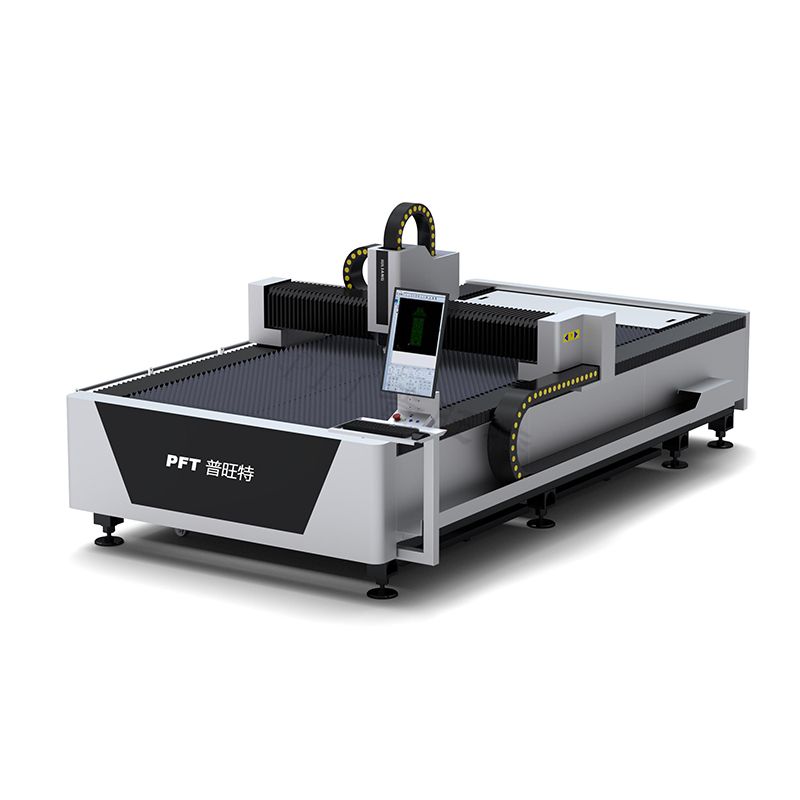
The PFT-3015 single-platform machine and enclosed exchange-platform machines serve different layout and workflow considerations. Product suitability and the final utility requirements depend on the configuration selected.
When you request a quotation, include your destination, available power supply, intended material and sheet sizes, available floor space and the gas and extraction equipment already on site. Ask for a configuration-specific layout and a clear list of buyer and supplier responsibilities.